
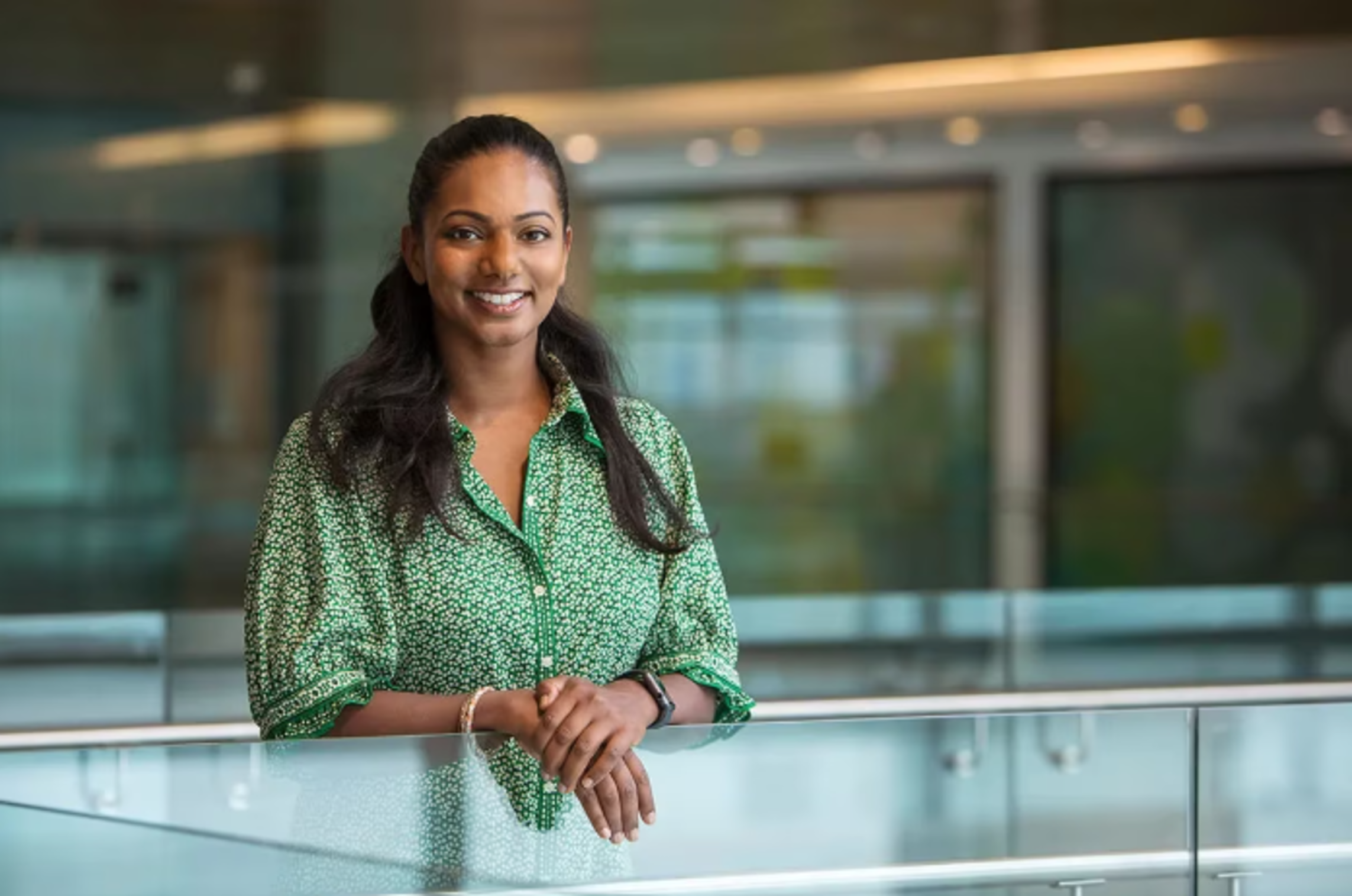
Breaking barriers for women in science
When Janine Balkissoon was growing up, she was fascinated by science and drawn to the potential it has for improving lives. Determined to pursue her dream of a scientific career, she completed her education and began working in a central lab; insight from her sister, a pharmacy assistant, led Ms. Balkissoon to her first research role in the biopharmaceutical industry. As a woman of colour (her parents are Indo-Caribbean), knowing how to navigate and grow from there became challenging due to a lack of female mentors whom she felt she could turn to for guidance.
“I didn’t know a lot about what I was doing in terms of my career path,” Ms. Balkissoon says. “There were only a handful of people who looked like me. I also didn’t see a lot of women leaders, so understanding what was possible in terms of my progression and seeing my future potential was difficult.”
Though important gains have been made in the 20 years since Ms. Balkissoon started her scientific career, diversity in science, technology, engineering, and math (STEM) professions remain a challenge in many countries, including Canada. For example, women hold more than one-third of STEM-related degrees, yet represent less than a quarter of the workforce in these fields. As you move into more senior leadership roles in science, that representation wanes even further.
“The lack of diversity left me questioning just how far I could go and wondering if I’d reached my limit,” recalls Ms. Balkissoon.
With the support of two strong female managers and mentors, she found her footing, adding new certifications and growing her expertise. Then, in 2018 a career move to AstraZeneca Canada (AZ Canada), where Ms. Balkissoon now plays a leading role in global oncology clinical trials as the director of study management in the company’s global research hub, fundamentally changed her experience. With strong representation of women and people of colour in leadership and throughout the organization, AZ Canada gave her the refreshing change of culture she was looking for – one in which diverse perspectives are sought after and welcomed.
Shahana Safdar, one of AZ Canada’s global development scientist director, says that leadership was not always reflective of a diverse workforce in her previous roles while working in academia. Growing up in a Pakistani home in a family of physicians inspired her to embark on a career in STEM; as an immigrant woman, she knew she would face barriers while pursuing her dream. Like Ms. Balkissoon, Ms. Safdar had difficulty finding mentors she felt comfortable with earlier in her career, and says it wasn’t until she joined AZ Canada in 2022 that she felt part of an environment in which the commitment to diversity and inclusion was clear.
:format(jpeg)/cloudfront-us-east-1.images.arcpublishing.com/tgam/TSXNVAAD3ND7RLVIARMUIKDKQY.jpg)
Shahana Safdar, AZ Canada’s global development scientist director, welcomes the company's focus on creating an inclusive and diverse environmentSUPPLIED
“Diversity adds colour to life,” Ms. Safdar reflects. “It’s encouraging that every company talks about diversity and inclusion, but I immediately noticed a difference when I came to AZ Canada. Here, I get the opportunity to work with many inspiring leaders and colleagues from all backgrounds. There is also a very real and structured approach to nurturing an inclusive and diverse environment – helping employees connect with others through forums, courses and workshops – to share experiences and learn from people they don’t have the opportunity to interact with on a daily basis.”
Both Ms. Safdar and Ms. Balkissoon cite the company’s employee resource groups, including the 350-plus-member-strong Network of Women (NOW) group, the work of the Canadian and Global Inclusion & Diversity Councils, as well as regular speakers and learning opportunities, as examples of AZ Canada’s diversity and inclusion commitment in action. They also applaud an internal forum called Women in Oncology, a quarterly initiative for senior leaders to come together and share their experience as STEM professionals working in oncology.
“It’s more than a ‘check the box’ policy at AstraZeneca,” says Ms. Safdar. “For instance, workshops and training sessions are often led by senior leaders who are women, and openly share similar challenges and how they’ve been able to navigate and overcome barriers.”
AZ Canada’s commitment to diversity plays out in the make-up of its workforce: roughly 70 per cent of employees and more than 60 per cent of senior leaders identify as women; 39 per cent of employees and 33 per cent of senior leaders are BIPOC (Black, Indigenous, People of Color). Globally, AstraZeneca has been recognized for its inclusive workplace policies and practices by both the Bloomberg Gender Equality Index (for the fourth year in a row) and the Human Rights Campaign Corporate Equality Index.
“Welcoming new and different thinking is how innovation thrives, and a key focus for us as we expand our research footprint and our R&D hub in Canada” says Gena Restivo, VP of Corporate Affairs & Sustainability. “When that diversity is coupled with inclusion – making sure people feel they belong and that their voice matters – and equity, it becomes a potent positive mix not only for us internally, but for the patients we ultimately serve.”
Ms. Balkissoon and Ms. Safdar agree, and say that ensuring their teams have a variety of perspectives has an important ripple effect: it allows them to design clinical studies that are inclusive of Canada’s, and the world’s, diverse patient population.
“Our R&D hub leads global clinical trials, engaging individuals from all walks of life around the world,” explains Ms. Safdar, who designs clinical trials for breast cancer and other diseases. “One of the core values at AstraZeneca is to put patients first, and our patients are incredibly diverse. We owe it to them to factor in their needs, so they can have trust in us that our treatments have been evaluated in people that look like them.”
Addressing inequity early: AZ and Girls Belong Here
Progressive changes like increasing diversity in clinical trials, together with a commitment to diversity and inclusion internally, are two of the ways AZ Canada is helping to address long-standing inequity in health sciences. Another is the company’s drive to empower diverse leaders, particularly in STEM.
A global partnership with Plan International Canada and AZ Canada aims to empower young women to unleash their potential as leaders and create change in their communities. The Girls Belong Here initiative brings young women aged 14 to 24 together with leaders in civil, corporate, academic, and government sectors. At AZ Canada, young women have had the opportunity to meet and share their perspective with the company’s leaders and employees, even serving as “president for the day.”
Lindsay Glassco, president and CEO of Plan International Canada, underscores the importance of partnering with organizations dedicated to creating a supportive environment for girls to lead and women to excel in leadership roles. She explains, “through Plan’s transformational youth leadership program, Girls Belong Here, we partner with organizations like AstraZeneca Canada to provide young women with the opportunity to experience high-profile leadership roles, allowing them to tap into their incredible potential. Too often, young women don’t see themselves represented in leadership, particularly in the spaces like STEM. These experiences offer a glimpse into a world where girls belong and promotes equal opportunities.”
Programs like Girls Belong Here, together with working in an environment like AZ Canada where diversity is valued and celebrated, make Ms. Balkissoon hopeful for the next generation of girls dreaming about a career in STEM.
“I didn’t see a lot of diversity when I started,” she says. “Now I work in a global research hub with people from around the world. I’m really inspired.”